Friday, November 21, 2014
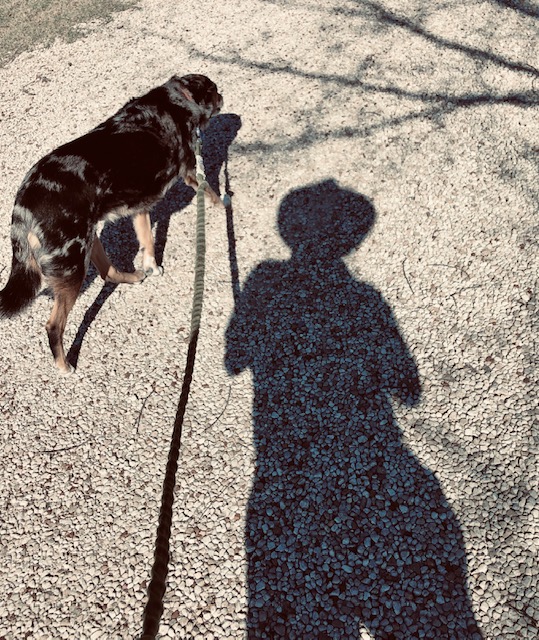
soak up sun like stone
Cold autumn day, yet
to be still is to grow warm --
soak up sun like stone.
photo: center stone at Heartland Farm labyrinth
Monday, October 20, 2014
Born of Spirit: A Song of Nicodemus
for Nathan at the celebration of
your ordination
The wind blows where it chooses,
and you hear the sound of it,
but you do not know where it comes
from
or where it goes.
So it is with everyone
who is born of the Spirit.
JOHN 3:8
See the scrolls and volumes on the
shelf,
reams of pages written,
countless sermons spoken (many
forgotten)—
words upon words
within words.
Know that all speech of the Beloved
remains one step (or more)
removed from the Source.
All of our descriptions are stammerings.
We speak our holy names,
and utter precise explanations.
Some are exquisite and beautiful,
some seem quite reasonable,
and altogether possible.
Our utterances are stones, piled into
cairns,
marking a path through wilderness.
They show us the way,
we hope.
Sometimes they are joined
with the mortar of fear and time
and they become a shrine,
a sanctuary,
a fortress.
“Lord, it is good for us to be in this
place!”
Only, we discover that to remain in this place
is to lose our
Way.
We must go back down the mountain.
We are called to wander from the
well-lit path,
away from roads of exposition,
into the wild lands of encounter.
So leave the books to collect their
dust,
leave the parchment bare,
trust that the silence will not fail
you.
Know that “blessed are the beginners”
and so are all who listen for wind,
and wonder in the dark.
Here you will know Jacob's struggle,
and blessing,
and wound.
Here you will know Mary's joy,
and surrender,
and lament.
Here you will dwell in the Teacher's
questions:
“What are you looking for?”
“Who do you say that I am?”
“Are you willing to drink the cup
that I drink?”
Do not rush you response.
Live fully your momentary answers,
and live the possibilities together
with your sisters and your brothers.
Listen for the Great Wind that blows where it
chooses.
Let it pass through you,
that you might be born of it again,
and yet again.
Saturday, August 2, 2014
exposure
“Birdbath after rainstorm” ©Eric Massanari
Light is a powerful and life-sustaining presence in our lives. We
depend upon it, especially the light of the Sun around which we turn
each day and night. Without this great light, life would cease on
Earth.
On that same trip we stopped in Las Vegas, Nevada. As we walked down
the Las Vegas Strip I was overwhelmed by the rainbow hues of neon,
casting colorful light on the faces of people, and reflecting off the
tinted windows of casinos. I couldn’t feel this light. It
had no endurance, no vitality to it. That strange city is a house of
a very different kind of stone, a wholly different kind of light, and
it felt terribly life-less.
Across spiritual traditions Light is used as a metaphor to describe
experiences of awakening, deepening awareness, and expanding insight.
We use terms like enlightenment, and illumination. It
is associated with the revelation of Divine truth and presence. In my
own Christian tradition, light becomes a primary metaphor for God’s
gift to the world in Jesus. In the words of Zechariah, father of John
the Baptist:
By the tender mercy of our God,
a dawn from on high will break upon us,
to give light to those who sit in darkness and in the shadow of
death,
to guide our feet into the way of peace.
Luke 1:78-79
The Light that guides us to our true selves and “on the way of
peace” is revealed in so many ways. Sometimes it shows itself in
blinding, revelatory flashes of insight and understanding rising from
within, and sometimes it reveals itself only in dim glimmers of
possibility and hope amidst the darkness. Sometimes, it even appears
as darkness to our eyes that have been blinded by the life-less
lights of our own creation.
The Light dwells in all people, glows through any moment, and streams
through the many traditions of faith and spirit that have illumined
the souls of women and men through millennia and summoned people to
gather and know their shimmering unity.
As you go about your day, look for signs of the Light shining in the
world around you and through the people you meet. Trust that this
will be revealed to you. And as you live, trust also that you bear
this Light in your own being - it is your own nature - and you have
been given this to share freely with the world.
What we plant in the soil of contemplation
we will reap in the harvest of action.
Meister
Eckhart
Friday, July 25, 2014
living the open questions
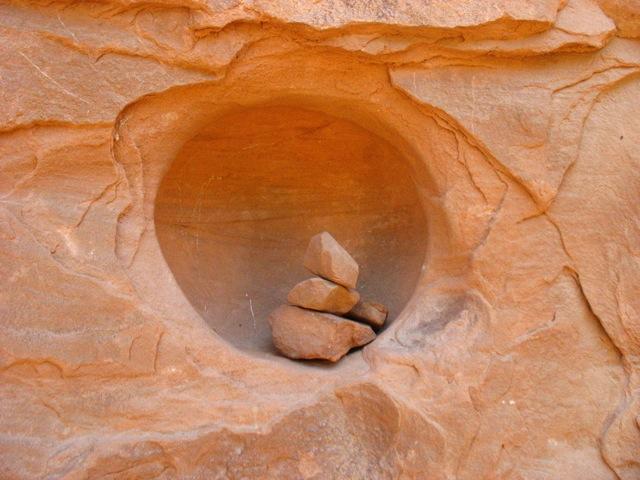
“Canyonlands cairn” ©Yolanda Kauffman
The next day John again was standing with two of his disciples, and as he watched Jesus walk by, he exclaimed, "Look, here is the Lamb of God!" The two disciples heard him say this, and they followed Jesus. When Jesus turned and saw them following, he said to them, "What are you looking for?" John 1:35-38
You might take a moment to imagine yourself walking that road behind Jesus, having just left one teacher and now wondering how to approach this potential new teacher. Before you can figure out what to say to him he turns, sees you following, and asks you directly: “What are you looking for?” How would you answer?
Throughout the gospel accounts we find Jesus teaching people by asking questions. Not just any sort of questions, of course. It is entirely possible for us to ask what I would call closed questions that essentially amount to answers and statements of presumption: What is your problem? Didn’t you realize that was going to happen? Don’t you hate it when….? Don’t you just love it when….? Isn’t this a beautiful day?
Jesus, like so many great teachers, knew the power of living with open questions, questions that invite living our way into life with an open heart and an open mind: What are you looking for? Do you want to be made well? Who do you say that I am? Can you drink from the cup that I will drink?
These are the questions that invite the disciple to listen within for the presence and guidance of God’s Spirit. Often times these are the sorts of questions we will need to return to again and again in the course of our lives: Who am I? What is my deepest desire? Where do I see God at work in my life?
Sometimes the open questions are the ones that lead us deeper into relationship with our sister and brother: Who is my neighbor? What does this person have to teach me? How is God already at work in your life?
If we live only with our iron-clad answers and well-defended assumptions it is difficult for us to hear the voice of God and to keep growing. When we allow the most intimate and open questions of faith to lead us then we know we are on a holy and vital path of life in God. As the poet Ranier Maria Rilke once advised an eager and aspiring young poet:
Be patient toward all that is unsolved in your heart and try to love the questions themselves, like locked rooms and like books that are now written in a very foreign tongue. Do not now seek the answers, which cannot be given you because you would not be able to live them. And the point is, to live everything. Live the questions now. Perhaps you will then gradually, without noticing it, live along some distant day into the answer. - from “Letters to a Young Poet”
Friday, April 18, 2014
Good Friday Meditations on the 7 Last Words of Christ
Meditations on The Seven Last Words of
Christ
I originally composed this series of meditations to accompany a performance of Franz Joseph Haydn's "The Seven Last Words of Christ" with the Arianna String Quartet at The Tassel Performing Arts Center in Holdrege, Nebraska. Haydn's moving piece is comprised of nine movements inspired by the story of the crucifixion and these final statements of Jesus from the cross. - Eric Massanari
Introduction:
The cross of
Christ:
it has become such
a ubiquitous image—
in sacred and
secular settings alike—
that we might be
tempted to forget that
the cross is more
than a symbol.
When it is
colorfully painted and hung on walls,
cast in precious
metals,
adorned with
costly gems,
suspended from
necks and earlobes,
we understandably
lose some
elementary memory
of the cross.
The cross was an
instrument of death.
More than this, of
course,
it was an
instrument of death as punishment—
a death meant to
be tortuously slow, agonizingly painful,
and humiliatingly
public.
The cross was an
instrument of an empire
intent on
maintaining power and control,
and willing to do
it through violence and fear.
Even more, the
cross is the very desecration of life—
the life created
in the image of God,
the life
pronounced good,
the life that is a
light to all people.
The life of Christ
follows a path
that must pass through
the desecrating
violation of the cross.
All who would seek
to follow the Way of Christ,
must remember that
this is part of the story.
The story of
Jesus' public ministry began in the wilderness,
fasting, praying,
listening, and confronting
a tempting voice
calling out:
“Be relevant!”
“Be wonderful!” “Be powerful!”
All were
temptations to place himself
at the very center
of things.
These temptations
he released,
so that Love might
remain at the center.
Luke, the gospel writer, tells us that at the end
of this time of wilderness fasting
the Deceiver left him until a more opportune time.
There were many “opportune times” that followed
as Jesus had to
decide again and again whether to walk
a way of power and
control, or a way of compassion and vulnerability.
What more
opportune a time for temptation could there be
than that moment
when one is aware
that suffering and
death are approaching?
The temptation to
flee, to fight, to hide is strong.
Jesus, in the end,
chooses to walk the way
that so many other
human beings
have been forced
to walk in this world.
He does not resist
or avoid this path;
rather, with
self-emptying love
he redeems it and
transforms it.
Shortly before he
was arrested and killed,
Jesus shared a
simple meal of bread and wine with his friends.
He likened the
bread to his body, offered to them.
He shared the wine
as a sign of his blood
poured out as an
oblation for the world.
And he also told
them this:
There is no
greater love than this:
to lay down
one's life for one's friends.
And now....
The Seven Last
Words of Christ.
- When they came to the place called The Skull, they crucified Jesus there with the criminals, one on his right and one on his left. Then Jesus said, “Father, forgive them, for they do not know what they are doing.” (Luke 23:33-34)
Jesus speaks words of
mercy
for those who pounded
the nails,
and those who divided
the spoils.
He speaks words of
release
for silent
bystanders,
and absent friends.
His words are a
beatitude for the blind,
a blessing for the
ignorant.
In this life it is
difficult enough
to forgive those who
see their trespasses with honesty
and who come to us
with apology.
But this,
this forgiveness for
all—
all who do not yet
see with honest eyes,
all who do not yet
weep with contrite hearts,
all who do not yet
speak the words, “I am sorry”—
this seems
like some strange,
imbalanced equation
of love....
….that is, until we
come to know our own need for it:
our own need for
such unmerited release,
our own need for
such immeasurable mercy.
Father, forgive
us, for we do not know what we are doing.
- One of the criminals who were hanged there kept deriding him and saying, “Are you not the Messiah? Save yourself and us!” But the other rebuked him, saying, “Do you not fear God, since you are under the same sentence of condemnation? And we indeed have been condemned justly, for we are getting what we deserve for our deeds, but this man has done nothing wrong.” Then he said, “Jesus, remember me when you come into your kingdom.” Jesus replied, “Truly, I tell you, today you will be with me in Paradise.” (Luke 23:39-43)
I imagine this
thief having no one there
at the foot of his
own cross.
No one is there to
bear witness to his death,
or weep for his
suffering.
I imagine his as a
life of wounding,
betrayal, and
burned bridges.
There is nothing
here to indicate that
he was one of the
faithful.
He recites no
prayer or creed,
he offers no pious
confession
to try and prove
he is worthy of anything.
He simply asks to
be remembered by one other person
in this moment of
his suffering, and his dying.
The thief is
assured of this, and much more.
Jesus gives him an
immeasurable gift of mercy and welcome—
the full welcome
extended to a beloved child of God
at the moment of
homecoming.
Today you will
be with me in paradise.
- When Jesus saw his mother and the disciple whom he loved standing near, he said to his mother, “Woman, behold your son.” Then he said to the disciple whom he loved, “Behold your mother.” (John 19:26-27)
I'm so glad I'm
a part of the family of God,
I've been
washed in the fountain,
cleansed by his
blood!
Joint heirs
with Jesus as we travel this sod,
for I'm part of
the family,
the family of
God.
The old hymn
emerges from childhood memory.
It frightened me
then—it disturbs me now—
with it's image of
washing in blood.
Blood: that
current of life within our bodies.
When blood flows
out, something is wrong;
a wound needs
mending,
a body needs
healing,
a relationship
needs reconciling.
What could be more
wrong than a mother
or father
witnessing the bleeding,
suffering, and
dying of their own child?
“Blood
relatives” is what we call those
with whom we share
foremothers and forefathers.
Jesus points
beyond so small a clan
and reveals the
familial bonds
found in our
common humanity.
His entire
ministry was devoted to
pointing people to
the truth that our lives
are forever woven
together with our neighbors,
joined in the
eternal diastole and systole
of the great,
beating heart of God.
The suffering of
one is the suffering of all.
The joy of one is
the joy of all.
Even from the
cross Jesus points to our neighbor near at hand
and the stranger
far away and says:
Here is your
son, your daughter.....
here is your
sister, your brother....
here is your
mother, your father......
- From noon on, darkness came over the whole land until three in the afternoon. And about three o'clock Jesus cried with a loud voice, “My God, My God, why have you forsaken me?” (Matthew 27:46)
It is the cry of
the abandoned,
an anguished
charge
against an
absentee God.
For some these may
seem
the most
unsettling words uttered by Jesus.
Artful exegetes
have gone to great lengths
to try and soften
the bitterness of these words.
For many others,
though,
there is great
grace in knowing
that Jesus dared
to pray this prayer.
Jesus joins his
voice with countless others
who have uttered
such a brokenhearted cry.
These words have
been spoken in many tongues,
in many lands, in
many horrible moments of history.
This is the prayer
of the battlefield,
the concentration
camp, and the mass grave.
It is the prayer
of the famine stricken, the abused,
the raped, and the
neglected.
It is the prayer
of the ailing and the dying.
This is the only
prayer one can offer
when nothing
remains to give solace,
and the longing is
all that is left.
For many who have
known such despair
there is a great
gift here:
the gift of
knowing that Love went so far as to
pass through this
deepest darkness,
and utter these
terrible words,
and then dare to
wait for an answer....
My God, my God,
why have you forsaken me?
- Knowing that all things were now accomplished, that the scripture might be fulfilled, Jesus said, “I thirst.” A jar of sour wine was standing there. So they put a sponge full of the wine on a branch of hyssop and held it to his mouth. (John 19:28-29)
The thirst for
water is a longing
that unites one
life with all life,
one body with the
great body of beings.
With these words
Jesus gives voice
to his own
particular need,
and in the same
moment
reminds us of a
need common to all.
We all come to
know thirst in this life,
the feeling of dry
mouths and parched lips,
and the
tissue-deep longing of our body for water.
We may also come
to recognize a deeper thirst:
the Spirit-birthed
thirst of our souls.
This is our thirst
for meaning,
for wholeness,
for justice,
for truth,
for compassion,
and for love.
In this moment
the Son of
Humanity, the Child of God,
gives voice to the
longing
of all bodies,
all souls,
all daughters and
sons of the Earth,
and all children
of God.
I thirst.
- When he took the wine, Jesus said, “It is finished.” And having bowed his head, he gave up his spirit. (John 19:30)
It is finished....
From the vantage
point of the living
death's finality is
felt
regardless of how it
comes.
Whether we deem it a
“good death,”
or wholly other than
“good,”
or a death somewhere
in between,
to be with another
human being
in the moment of
their death
is to stand on sacred
ground.
In the face of such
mystery one wonders:
Is it finished? Is
this the end?
Is this an
impenetrable barrier,
or is it a threshold
with the door held
wide open for all?
I think of Jesus'
mother, his disciples and friends, wondering:
Was it all for
nothing?
Is it all
finished?
Has evil won out
over love?
Jesus had once given
them a parable,
and like most of his
parables it was simple,
and it smelled of the
earth. He said to them,
Unless a grain of
wheat falls into the ground and dies,
it remains just a
single grain.
But if it dies, it
bears much fruit.
It is finished....
...finished, in the
way that a seed is finished
when it falls into
the ground and dies.
...finished, in the
way that the wave is finished
when it climbs the
shoreline and then returns the sea.
- Jesus cried out with a loud voice saying, “Father, into your hands I commend my spirit.” And having said this, he breathed his last. (Luke 23:46)
There have been
moments
at the bedsides of
the dying
when I have found
myself
suspending my own
breathing,
forgetting it for
long periods.
The silence and
stillness grows
in the spaces between
in-breath and
out-breath.....
I hold my own,
and wait,
and watch
until the breath of
the other is no more.
Luke describes Jesus'
last breath
as a final act of
offering.
It has not been taken
from him
by the violence of
others.
His spirit is his to
commend
and his last breath
is his to give
into the hands of God
with the prayer of
the Garden
still resounding:
Not my will, but
thy will be done...
Fear is now gone.
Betrayal has ended.
Evil holds no sway
in this final moment,
as the sacrament of
the Christ-breath
is emptied out
and shared with the
world.
The Earthquake
At that moment the curtain of the
temple was torn in two, from top to bottom. The earth shook and the
rocks were split. The tombs also were opened, and many bodies of the
saints who had fallen asleep were raised. After the resurrection they
came out of the tombs and entered the holy city and appeared to many.
Now when the centurion and those with him, who were keeping watch
over Jesus, saw the earthquake and what took place, they were
terrified and said, “Truly this man was God's Son!” (Matthew
27:51-54)
Now, the stones
cry out,
and the earth
shakes,
at the death of a
beloved child of God.
The words from the
cross shudder downward
through fibers of
try timber, enter the ground,
and dive deep into
bedrock.
Creation screams
its grief
at the desecration
of life.
Perhaps with our
muted and
atrophied senses
we miss the signs
that are all
around us,
signs of the
earth's lament
when it must
witness the suffering
and accept the
blood of the innocent.
If we could attune
ourselves
to the cry of the
stones
we would hear
their keening,
and perhaps
something more.
For in this moment
when all seems lost,
the earth itself
makes an appeal:
The Word of
Love will not be silenced.
It will revive
and resound again and again!
The Light of
Life will shine in the darkness,
and not even
the darkness of death
will overcome
it.
Such will be the
cry of one great stone
that will roll
from the mouth
of an empty tomb.
Sunday, December 22, 2013
solstice
photograph by Yolanda Kauffman
Solstice
On this long night
snow fills the cracks in
the unscraped siding of my home—
tasks of long days
left undone.
Light fills the fissures and gaps
light of the town,
light of moon and stars
seeping through cloud,
light of my neighbors,
light of the stranger I just met
pulling his son down the street
on a makeshift sled.
Light reveals
what is unfinished is
now done.
Light shows
what is undone is
now complete.
Light illumines
In the beginning and It is finished are
now one.
Sunday, November 3, 2013
drink the light of leaves
Drink the light of leaves
that paint the path of the wind.
Taste. See. They must fall.
Autumn, like each season, is a great teacher. She teaches the path of releasing life to give life, the path of dying to live. Wise teachers and traditions have taught the same thing that autumn trees teach: dormancy, dissolution, death and decay are integral parts of the great pattern of life. And more than this: some things must depart and die away so that the enlivening energies of the Spirit can be revealed.
Each day now I go to work and spend my days with elders, women and men who are living in the twilight years of human life. From one point of view, great losses and departures define their days. For a long time this was all I could see in the lives of elders, and it frightened me terribly.
I recall my grandfather's face--its deepening lines and especially his eyes--revealing the chronic pain that gripped his heart muscle during most of his waking moments. I remember my maternal grandmother's own heartache at the absence of my grandpa, and how it seemed to grow through her years of living alone, rather than subside (as I secretly wished it would). I remember her writing me weekly letters when I was away at college, and how I wrote only a few brief notes in reply. I was afraid of the pain and losses of my elders. And such fear defines our culture. We fear the losses that are an inevitable part of aging and dying. Our fear prevents us from seeing that in all of this there may also be gift.
The elders in my life right now are teaching me to release fear. They are teaching me to look deeper, and see the way in which deaths and lesser losses sometimes reveal a light that could never be dimmed with aging or dying. Like the wind-tossed leaves of autumn, the paths of their lives reveal the shimmering colors of the Spirit, the One who blows through all.
Sunday, October 27, 2013
the gate of heaven is everywhere
The gate of heaven is everywhere...
including at the heart of our being
At the center of our being is a point of nothingness which is untouched by sin and by illusion, a point of pure truth, a point or spark which belongs entirely to God, which is never at our disposal, from which God disposes our lives, which is inaccessible to the fantasies of our own mind or the brutalities of our own will. This little point of nothingness and of absolute poverty is the pure glory of God in us… It is like a pure diamond, blazing with the invisible light of heaven. It is in everybody, and if we could see it we would see these billions of points of light coming together in the face and blaze of a sun that would make all the darkness and cruelty of life vanish completely…I have no program for this seeing. It is only given. But the gate of heaven is everywhere.
Thomas Merton, Conjectures of a Guilty Bystander
Abbot Lot came to Abbot Joseph and
said: 'Father, according as I am able, I keep my little rule, and my
little fast, my prayer, meditation and contemplative silence; and
according as I am able I strive to cleanse my heart of thoughts: now
what more should I do?' The elder rose up in reply and stretched out
his hands to heaven, and his fingers became like ten lamps of fire.
He said: 'Why not be totally changed into fire?'
From the Sayings of the Desert Mothers and Fathers
A friend once questioned a reference I made to "the heart of being," and my description of it as that place where God dwells in each person. She asked, "Where do you think that place is within us? Can you point to or imagine an actual physical location?" It was an interesting question and I realized that when I have spoken of this "heart of Being" I typically point to the left-center of the chest, that place where the human heart muscle beats away and pumps life-giving blood.
The human heart has long been a symbol for the indwelling presence of God. The metaphor speaks on many levels of vitality, love, the flow of life within our flesh, and the flow of life-energy joining all beings. In the Hebrew scriptures there are many references to the heart. One of my favorites comes from the prophet Ezekiel who uses what seems to have been a common Hebrew notion of hearts growing "hardened," calloused by pride, self-seeking, and fear. Ezekiel speaks of the power of God to not only soften hardened hearts but, when needed, to grant us a new heart:
I will sprinkle clean water upon you,
and you shall be clean from all your uncleannesses,
and from your idols I will cleanse you.
A new heart I will give you, and a new spirit I will put within you;
and I will remove from your body the heart of stone
and give you a heart of flesh.
I will put my spirit within you... Ezekiel 36 25-26
A spiritual "heart transplant," I suppose one could say. And who hasn't felt a need for that from time to time? I especially notice here that what is given is a "heart of flesh." It speaks of a heart that feels, a heart that loves, a heart that expresses mercy and compassion, a heart that is vulnerable and open to love in this life and in this world. A heart that is willing to hurt and ache with love.
Another level on which the metaphor of the heart speaks is the fact that our heart beats without our own conscious effort. It simply happens, without our direction, unless otherwise impacted by injury or illness. It is a meaningful analogy for the movement of God's own Spirit at the center of our lives, flowing and bestowing gifts without our own conscious awareness, and well beyond our efforts to control it.
For our part, to practice bringing our awareness to God's presence at the heart of our being can profoundly transform the way in which we live our daily lives. To practice attentiveness to that "point of nothingness" at the center of our being can deepen our capacity to live from this center, and to live from this heart of love. It is what can tip the scales of our lives toward compassion, wisdom, generosity and mercy. It is what I imagine Abba Lot means in the story above when he asks: "Why not be totally changed to fire?"
The ancient Gnostic worldview held that this inner spark or light of God demands release from the fallen, sinful, fleshy realities that come from being human. They taught that this indwelling presence of the Spirit at the heart of our being is held captive by our physical being, and believed that there was special spiritual knowledge and practice that would bring about its rescue and release.
Jesus revealed a Way that was entirely different. He did not teach a separation between the spirit and flesh, or between the divine and the human. He taught and embodied the union of these realities.
Jesus did not disparage embodiment. Instead, he showed what it looks like to live each moment from the heart of the God-presence within us, uniting our divine and human natures. He showed through his own acts of self-offering love what it means to see this same heart in others as we live. He excluded no one from this vision and understanding; he taught that such a life is possible for all. He proclaimed a "kindom" of God already present within us and among us, and the will of God "done on earth as it is in heaven."
Jesus made abundantly clear that it is possible for each person to live from this place, to live with such great love, just as he did. This is not something we have to achieve, or earn, or some secret knowledge we must learn. It is a gift already given. Our capacity for such fullness of life is already promised. We must simply be attentive and open enough to receive it and allow it to pass through us.
As Christians, we can and should go so far as to say that when we speak of "Christ" we speak not only of one historical moment and person--the full union of divine and human realities in the person of Jesus of Nazareth--but we speak of all those lives and historical moments through which this union is revealed. When we come to deeper awareness of what lies at the heart of our being--our "original blessing"--and receive the gifts God has already given us, we become one with Christ. Put even more directly, we become Christ present here and now. We may also then come to see, as Merton describes so beautifully above, that "the gate of Heaven is everywhere," including deep at the center of our lives.
Saturday, October 5, 2013
becoming what we believe
window in the Church of St. Martin in the Fields (London) by Yolanda Kauffman
Matthew 9:27-34
The Message (MSG)
27-28 As Jesus left the house, he was followed by two blind men crying out, “Mercy, Son of David! Mercy on us!” When Jesus got home, the blind men went in with him. Jesus said to them, “Do you really believe I can do this?” They said, “Why, yes, Master!”
Become what you believe.
What we believe holds great power, and exerts influence over the trajectory of our lives. If I believe I have worth only inasmuch as I wield authority and influence over others, I will very likely do whatever I can to gain power and control in my relationships.
If I hold a fundamental belief that human beings are innately bad and broken at the heart of our being, I will be inclined to see my own faults and the faults and failings of others (usually those of others first!), and may have a difficult time trusting people's motivations and intentions.
If I experience a great disappointment or setback in my life, the path leading on from that moment has much to do with what I believe about it. If I believe the setback is an unwanted intrusion and interruption in an otherwise desireable course of events, I will probably meet it with resistance and defensiveness. I will not allow myself to fully encounter and experience it. Very likely, I will look for someone or something to blame in order to explain why this has happened to me, and I may move into the future with a more guarded and wary spirit.
However, if I choose to accept a disappointment as an inevitable part of living, and even an opportunity for learning and growth, I will be better able to experience that moment fully and openly. Rather than getting wrapped up in patterns of blame, shame, and guilt, or trying to exert control over circumstances that are naturally beyond my control, I can choose to live from that moment in a more yielded, flexible and creative way.
There is a powerful alchemy to belief, and Jesus understood this well. Perhaps that is why he asked people questions like:
Do you believe that I am able to do this? (Matt. 9:28)
or
Do you want to be made well? (John 5:6)
And perhaps it is why Jesus often sent people off with the blessing, "Go, your faith has made you well."
I struggle sometimes with this word "belief." So often when we use it in religious circles we usually mean agreeing to certain doctrines and dogmas that have been established. "I believe in the virgin birth." "I believe in the resurrection." Either that or we cheapen its meaning by implying that it should somehow just magically be there if we say so. "You just need to believe!"
When Jesus spoke of belief I sense he was pointing to something much deeper in our being, something more than giving rational assent to an idea, something more than the power of positive thinking, and certainly something other than thoughtless consent. Jesus was speaking of an orientation of one's whole self--mind, heart, body and soul. Belief, as he spoke of it, suggested trust and a certain amount of vulnerability before life. It implied an openness to accept and share love. It also has to do with a willingness to change.
As the gospel stories reveal, it is often the people who have suffered most deeply and feel most lost who come to understand this orientation of belief, and who discover what becomes of it. These are the ones who know, through their own experience, what it means to be vulnerable enough and open enough to know their own need for healing and transformation, and their own desire for love.
The two men who follow Jesus on the road to his home do not know what will become of this moment, but they believe that this is the man they must follow, this is what they must do in order to find hope once again. They have reached a point of total openness and vulnerability. And when they finally catch up with Jesus, they simply cry out for mercy. Love is able to do something healing with such openness.
Jesus also knew that so many people grow calloused and cynical as we live. We toss shrouds over the light of faith and love that can well up from our hearts and in the world around us. We have our well-guarded answers for "the way things are" and they often prevent us from seeing the possibilities of what could become of us, our neighbor, and our world.
Perhaps this is why Jesus asks the two men to keep their experience to themselves for the time being. Others will not understand; they will either call it a hoax or some rare, super-natural miracle. Either way, they will continue to miss the transforming power that might well up in their own being.
Wednesday, August 7, 2013
give us a sign
Yesterday, while hiking into the high country of the Sangre de Cristo mountains of Colorado, I lost the trail. Admittedly, I had gotten a bit of "trail daze," which is what I call it when one is plugging along a clear path and simply taking for granted that the path is there, not paying attention to other important indicators that one is headed in the desired direction.
Rather than notice the trail crossing a log over a nearby stream, I assumed it went up an adjacent drainage which looked well-worn (it was, by water and not by human feet). I didn't go far before all signs indicated that I was no longer on the trail--the path grew treacherously steep and overgrown, then eventually ran into a sheer granite wall! A couple who had been hiking close behind me on the trail actually followed me up the drainage for a brief time, believing I knew the way. Nope! Surprise!
We backtracked down the slope (finding a bee's nest under a patch of willows en route), and with little trouble observed the stream crossing and the main trail clearly continuing on the other side. The signs were there, we just hadn't noticed them.
During this time of retreat I've thought about "signs" and the things I sometimes hope to encounter in the silence and solitude. I hope for indicators along the way that I'm on the right track, confirmations that I'm doing my time of retreat well, that God is present and pleased. Again and again, I am invited to remember that sometimes it is a gift when such desired signs fail to appear. Sometimes it is in the absence that we encounter true Presence.
It isn't that confirming signs along the journey are "bad" or unhelpful. We hope and pray that there will be markers along the way to help us know whether our path is leading in a life-giving and faithful direction. If we've committed to a spiritual community we certainly hope that the relationship brings nourishment and joys along with the inevitable challenges. If we commit ourselves to a meditation and prayer practice we hope that such practice will bear fruit through our lives and that there will be some noticeable signs of this fruit. If we join others in acts of service or working for justice it is natural to hope for signs that our labors are not in vain.
However, it is also true that we sometimes look for signs that will confirm our way of seeing the world, ourselves, and other people. We want to see things that affirm the viewpoints we hold, and perhaps disavow the perspectives we do not agree with. It is the natural inclination of our ego-self to seek such confirmation and consolation. It is tempting to see things the way we want to see them, and to craft the world, and others, and even God in our own image. Consequently, we miss much that is right there in front of us.
I think of the phrase that appears more than once in the first chapter of John's gospel: "Come and see." When the first disciples encounter Jesus and their curiosity is peaked they ask him where he's headed and he replies, "Come and see." When some of the disciples are talking with their friends who voice their doubt as to whether anything good can come from Nazareth, Philip replies, "Come and see."
Remain open, stay curious. Come and see.
Those who decided to "come and see" encountered quite a spectrum of signs along the way that indicated who Jesus was and what he was about. Most of those signs were unexpected and many were unwelcome. There were also those confirming moments of wonder and rapture, like Peter, James and John witnessing the transfiguration of Jesus on the mountaintop (Matthew 17:1-13). In that spectacular moment Jesus had to remind them that they needed to go further still, to go back down the mountain and see even more.
Consider, too, the utter vacuum of loss experienced by the disciples immediately following Jesus' death. There were no signs of confirmation whatsoever in that moment, and if anything the experience called into question everything they had experienced or thought they had understood up until that moment. It was a sign-less time. It was only through that terrible absence that they then came to encounter the fullness of Presence and the gift of the Spirit that was soon given.
There were others who met Jesus along the way who demanded signs, signs that would confirm how they had already labeled him: heretic, king, prophet, healer, wonder-worker. Jesus had little patience for this. To a group of demanding Pharisees he said:
When it is evening, you say, "It will be fair weather for the sky is red."
And in the morning, "It will be stormy today, for the sky is red and threateniing."
You know how to interpret the appearance of the sky,
but you cannot interpret the signs of the times.
An evil and adulterous generation asks for a sign,
but no sign will be given to it except the sign of Jonah.*
Gospel of Matthew 16:1-4
In another story we hear of Jesus' return to his hometown of Nazareth. The people there have heard about his exploits but cannot believe that "the carpenter, the son of Mary," this man who grew up in their midst, could be capable of such powerful things. The story concludes with these words:
And he could do no deed of power there,
except that he laid his hands on a few sick people and cured them.
And he was amazed at their unbelief.
Gospel of Mark 6:5-6
Sometimes we can see only the signs of what we expect to see. And sometimes, we are blind to the signs that are staring us directly in the face. The practice of maintaining a stance of openness of heart and mind, curiosity, and a listening spirit is vital.
Jesus did not leave his friends with a set of pat answers, and concrete signs that could be planted in the ground like some sort of claim-staking flag. Jesus did not form a new religion, nor did he leave behind any dogma or doctrine as signs to describe the path of faith. He wrote no scriptures. He did not leave a rule or creed. Jesus left his friends with the gift of the Spirit of God, the same Spirit that had animated his every word and action. He left his friends with a Way to live in that Spirit as we make our way through life.
For those who seek to follow Christ's Way, there will be signs helping find the path--many of them surprising and unexpected. There will also be sign-less times, desolating in their experience of absence. These we can be grateful for, too, because they connect us with our deepest longing for life and love. There, too, is God.
* The "sign of Jonah" is thought to be a reference to the three days that Jonah spent in the belly of the great fish and a signifier of Jesus' death, entombment, and resurrection.
Subscribe to:
Posts (Atom)
When even the shadows can heal
Yet more than ever believers were added to the Lord, great numbers of both men and women, so that they even carried out the sick...
-
photo courtesy of: http://runitfast.com/2011/10/10/heartland-100-mile-ultra-belt-buckle-2011/ There are certain experiences in life that cre...
-
doorway in Santa Fe, New Mexico by Yolanda Kauffman This Path From circumference to center from center to circumference...